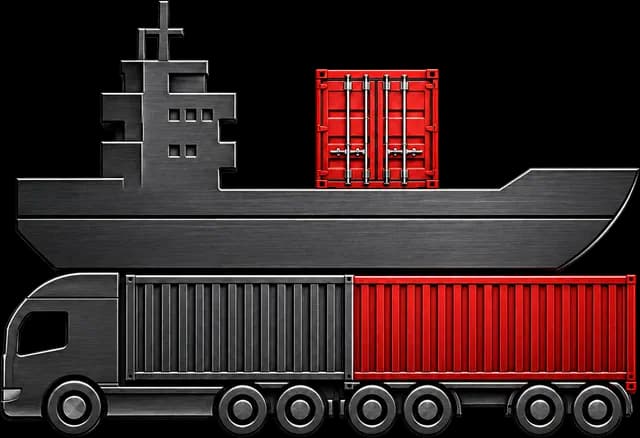
Sea + road
When to consider itWhen a sea service can accept the cargo and road transport connects the supplier and final delivery site.
Port handling, container acceptance and release deadlines, pickup, equipment return and access at destination.
Multimodal logistics from supplier collection to receipt at your site. We coordinate route legs, cargo handovers and documents so that next steps and responsibilities are clear before dispatch.
Multimodal delivery uses two or more transport modes. The aim is not to add more legs. It is to ensure that the next participant can receive the cargo when the previous one is ready to hand it over.
Select a stage to see the checks and evidence needed at each handover.
Production completion and transport readiness can fall on different days. Before a vehicle arrives, check packing, package counts, loading arrangements and documents.
A container reaching the terminal does not confirm vessel loading. Booking conditions and cargo and document cut-offs need separate checks.
At a connection, physical cargo availability, permitted operations and onward transport readiness must align. Each needs its own confirmation.
Assess rail together with delivery to the departure terminal and collection at destination. Train transit alone is not the complete delivery time.
The final leg does not end at the terminal gate. Arrange access, permits, receiving hours and safe unloading before arrival.
Illustrative sequence, not live shipment tracking. A route does not necessarily include every stage shown.
Start with cargo constraints and the business objective. If one transport mode meets the requirement, there is no need to add complexity.
When a sea service can accept the cargo and road transport connects the supplier and final delivery site.
Port handling, container acceptance and release deadlines, pickup, equipment return and access at destination.
When available rail services can connect the shipment's origin and destination, with road transport covering the ends.
Station and terminal capabilities, confirmed capacity, shipment restrictions and onward collection.
When geography and cargo conditions justify another mode change. Compare this combination with a simpler alternative.
Handover count, terminal compatibility, connection buffers and the total cost of intermediate operations.
A transport mode in a diagram does not confirm a specific service is available. Cargo, participants and current conditions must be checked.
A lower main-leg rate does not necessarily mean a lower total delivery cost. Compare offers with matching scope: where collection begins, where delivery ends and which operations are included.
| Cost item | What to clarify in the offer |
|---|---|
| Collection and preparation | Vehicle positioning, loading, packing and delivery to the first terminal: who performs each task and what is included. |
| Main transport legs | Each leg's rate, applicable surcharges, billing currency and quotation validity. |
| Terminals and transfers | Handling, transfers, storage, free-time allowances and the conditions that trigger additional charges. |
| Documentation and checks | Document coordination, specialist services and mandatory payments: what is included and what is assessed separately. |
| Last mile | Collection, site access, waiting, unloading and container return where relevant to the route. |
| Separate conditions | Insurance, special handling and changes of plan. Clarify charge triggers rather than adding an undefined contingency. |
An illustration of contractual terms, not a Container Company tariff. The selected participants' terms and the specific quotation apply.
Container time-related charges: an example of carrier terms ↗Distinguish planned dates, confirmed windows and actual events in the schedule. Make connection buffers explicit: one leg's arrival should not automatically be treated as the next leg's departure.
Illustrative example: packing finished later than expected and the nearest departure is no longer available. Moving one date is not enough.
Locate the cargo, confirm packing and document readiness and identify confirmed bookings. Separate costs already incurred from potential charges.
The next departure, a different terminal or another transport sequence. Check feasibility, new dates and additional operations for each option.
Show the client the effect on cost and final receipt. After selection, update bookings, documents, responsible contacts and the next control event.
An alternative route is not promised in advance. The relevant participants must confirm feasibility and conditions.
You do not need a perfect brief. Existing documents, photographs and a list of unknowns are enough to start. Better inputs mean fewer assumptions in the route.
Description, use, quantity and properties to check, including fragility, temperature needs, batteries or liquids.
Package count, packed weight and dimensions per piece, photos and stackability. For unusual cargo, available drawings and lifting points.
Collection and delivery addresses, site contacts, access and loading restrictions, not just country names.
Confirmed or expected readiness, target receipt date and its reason: installation, startup, an exhibition or stock replenishment.
Delivery terms with the named handover point, invoice, packing list, specification, selected carriers and existing bookings.
Budget limits, acceptable waiting time, unwanted handling and whether the shipment can be split. Separate requirements from preferences.
The agreed scope defines the materials and level of detail. Route selection and coordination may include:
Locations, transport modes, connection operations, participants and conditions for moving to the next stage.
Included and separate costs, quotation validity, assumptions and items awaiting confirmation.
Control events, evidence sources and participant contacts. When plans change, it is clear which arrangements need reconfirmation.
No. A multimodal route can combine two transport modes. A third is added only when it helps the specific shipment. More legs are not a benefit in themselves.
No. The container itself may transfer between vehicles without unloading its contents. Repacking, consolidation, inspection or a packaging change may be needed under particular conditions. Agree operations and access to the goods in advance.
An initial model can be discussed with explicit assumptions. A working offer needs confirmed packed measurements, addresses and handling conditions. Changed weight or dimensions may affect not only the price but also the available transport method.
For packed containers on ships subject to the relevant SOLAS requirements, verified gross mass (VGM) is a condition of loading. The shipper is responsible for providing it. Confirm submission timing and method with the carrier and terminal; VGM alone does not guarantee loading.
IMO guidance on VGM ↗Do not assume it is. Confirm coverage, insured legs, exclusions, deductibles and claim notification procedures separately. Carrier liability should not be treated as equivalent to a separate cargo insurance policy.
First record the event, location, cargo condition and supporting evidence. Then contact the party responsible under the applicable contract, observing the claims procedure and deadlines. Within the agreed role, we may coordinate information and communication, but do not replace the carrier, insurer or specialist adviser.
Send the origin, destination, shipment parameters and target date. We can discuss which transport combinations merit checking and what information is missing for the next step.